
Lafayette's Verified City Directory Shelf
Lafayette has no verified Lafayette-only Polk shelf in the material identified for local research. The strongest confirmed set is the Library of Congress U.S. Telephone Directory Collection, where Contra Costa County White and Yellow Pages include Lafayette inside a countywide volume. That scope matters. A county book is not a city-only directory, and one line in a telephone book is evidence of a subscriber's association with a phone and address at publication, not a list of every person who lived there.
The verified coverage comes in separate issue groups, not an unbroken 1934 to 1978 run. The first group covers December 1934 through September 1941, followed by distinct later groups. Exact 1964 through 1975 issues were not verified, so a gap must remain visible when a household timeline crosses that span.
| Collection | Years | Where Held | Access |
|---|---|---|---|
| Contra Costa County White/Yellow Pages | Dec. 1934-Sept. 1941 | Library of Congress, item 01709 | Digitized scan and OCR |
| Contra Costa County White/Yellow Pages | Sept. 1942-Mar. 1946 | Library of Congress, item 01710 | Digitized scan and OCR |
| Contra Costa County White/Yellow Pages | Dec. 1946-June 1948 | Library of Congress, item 01711 | Digitized scan and OCR |
| Contra Costa County White/Yellow Pages | Mar. 1949-Sept. 1950 | Library of Congress, item 01712 | Digitized scan and OCR |
| Later Contra Costa issues | May 1951-May 1952; May 1953; May 1954; July 1955-1963 | Library of Congress, items 01713-01724 | Verify each issue image |
| Contra Costa County White Pages | Aug. 1968 | Library of Congress, item 01729 | Digitized scan and OCR |
| Central Contra Costa White Pages | Aug. 1976, 1977, 1978 | Library of Congress, items 01735, 01737, 01739 | Issue images must be checked |
Older issues are county-indexed because Lafayette was unincorporated until 1968. The table also explains why a search for a Lafayette address can land under a Contra Costa heading. Record the issue date printed on the page itself. A multi-issue digital object title is not a substitute for that check.
Note: Item titles can bundle issues, so write the date printed on the image beside every Lafayette listing you copy.
Lafayette Directories, Not Polk
The Library of Congress material is often mistaken for a Lafayette Polk city directory. The verified scans are countywide white and yellow pages. They sort residential subscribers by surname, then given name or initial, and show the printed street address and telephone number. They are useful snapshots, but they are not occupation-rich books with a full social or household profile.
No spouse, occupation, ownership, or widow notation should be added to a Lafayette entry unless another source supplies it. A missing name may mean that the person had no telephone, used an unlisted number, appeared under another household member, or was omitted from the book. The right conclusion is a bounded one: the named subscriber was associated with the listed phone and address when that issue was published.
Scope check. Treat each white-page line as subscriber evidence, then seek a census, deed, obituary, or oral history for a different question.
Lafayette City Directory Indexes
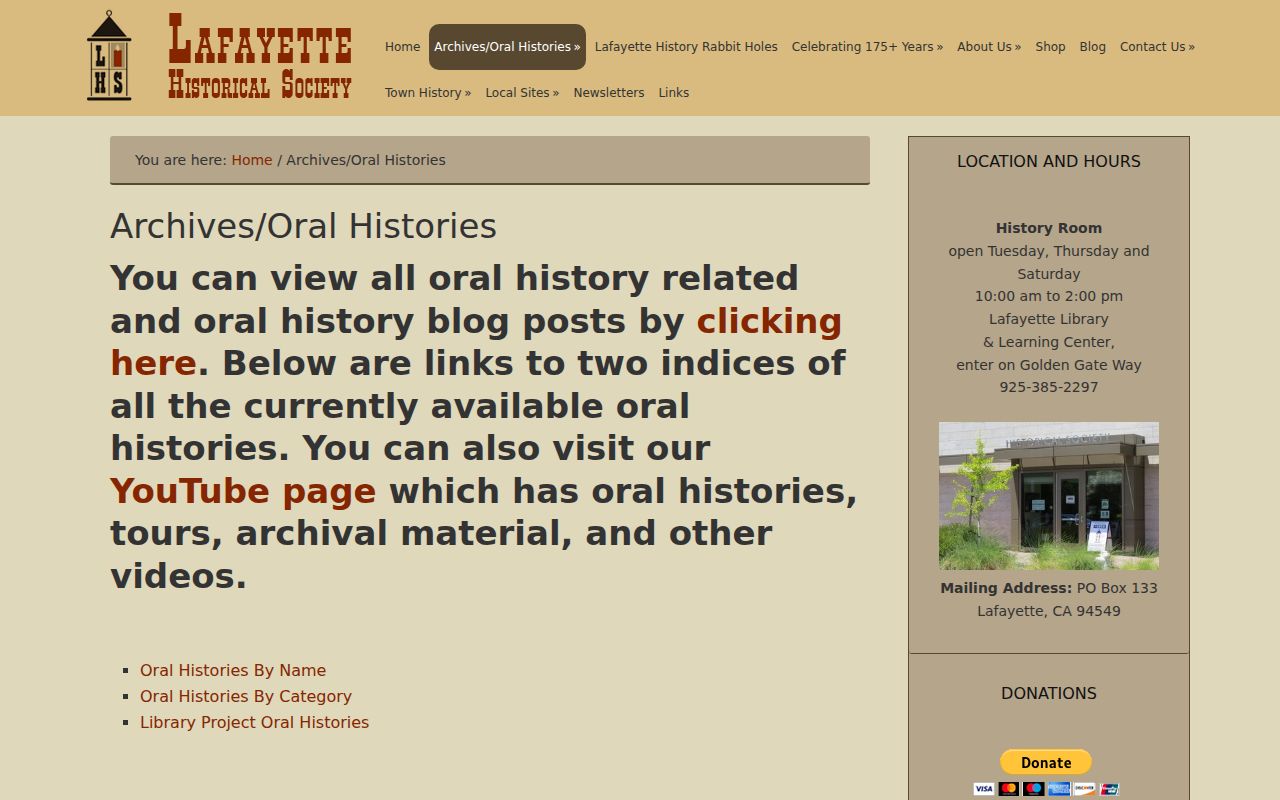
The Lafayette History Room inside Lafayette Library is the local starting point when a telephone listing needs context. It is also the local desk to ask about a Lafayette city directory gap. The room is reached through the Golden Gate Way entrance and is open Tuesday, Thursday, and Saturday from 10 a.m. to 2 p.m.; the research phone is 925-385-2297. Its local photos, deeds, maps, memories, and indexed oral histories can connect a surname to a place, school, farm, civic group, or road without turning a one-line listing into a complete household claim.
The Society's name and category oral-history indexes offer two paths. Start with a family name when a scan supplies one, or start with a place or community subject when the surname is unclear. Ask staff about vertical files, telephone books, photographs, assessor maps, subdivision maps, and old address forms. A formal house-history service is not promised, so the request should be specific.
The room's 2009 Library Project and the August 2024 interviews with Marty Brinckerhoff and Kim Conti Clutts, along with the March 2025 interview with John D. “Johnny” Marchant, extend the archive into living memory. These records can explain relationships and chronology that a telephone book cannot show.
The Lafayette oral-history collection places a local research desk and its visual archive in context.
Oral histories are best used as a lead to test against a dated directory, census schedule, deed, or newspaper account.
Reading Lafayette City Directory Entries
A Lafayette city directory entry should be transcribed as a small record, not paraphrased as a story. Start with the subscriber name exactly as printed. Then preserve the street address and telephone number, including an old exchange format. The issue date belongs beside the transcription because the same digital object can contain more than one issue. A clean inventory makes later comparison possible and keeps gaps from becoming invented facts.
| Subscriber name | Alphabetical surname followed by given name or initial |
|---|---|
| Street address | Printed residential address tied to the subscriber listing |
| Telephone | Number printed for that subscriber in that issue |
| Issue date | Date read from the scanned page, not inferred from the object title |
| What is missing | No complete household roster, ownership mark, or assured explanation for an absent name |
That inventory also prevents a common error. A directory can show a named subscriber at a street address without showing children, relatives, visitors, or another person who shared the home. A stable number across issues can help distinguish two people with the same surname, but number formats and exchanges changed. Keep the printed form and note the limits.
- Subscriber
- The person named in a telephone listing, whose association with the printed phone and address is direct evidence for that issue.
- Criss-cross directory
- An address-first reverse directory. No R.L. Polk or reverse-directory shelf run was verified for Lafayette, so local claims require repository confirmation.
- Householder index
- A name or address aid used to locate household listings. The verified LOC books are alphabetical subscriber listings, not a confirmed householder-index series.
- Abbreviation key
- The volume's own guide to short forms. Check it before expanding initials, street terms, or other marks.
OCR in Lafayette Directories
Optical character recognition makes the LOC collection searchable, but small white-page type produces errors. Search a surname alone, try the surname with initials omitted, and repeat with likely letter confusions. Then inspect the actual scan around the hit. A machine text match is a lead, not the record itself. Visual review matters most when a road name, initial, or telephone exchange decides whether two entries belong to one person.
Write down the printed surname, given name or initial, street line, number, and issue date. For a known address, search the surname from a deed, census, tax book, or oral history. For a known person, follow the street and number across the next verified issue. The countywide scope means a Lafayette hit may sit under a broader Contra Costa locality heading, and pre-1968 records remain county-indexed.
Note: Search variants help recover OCR misses, but only the page image can settle a doubtful letter or digit.
Lafayette City Directory Gaps
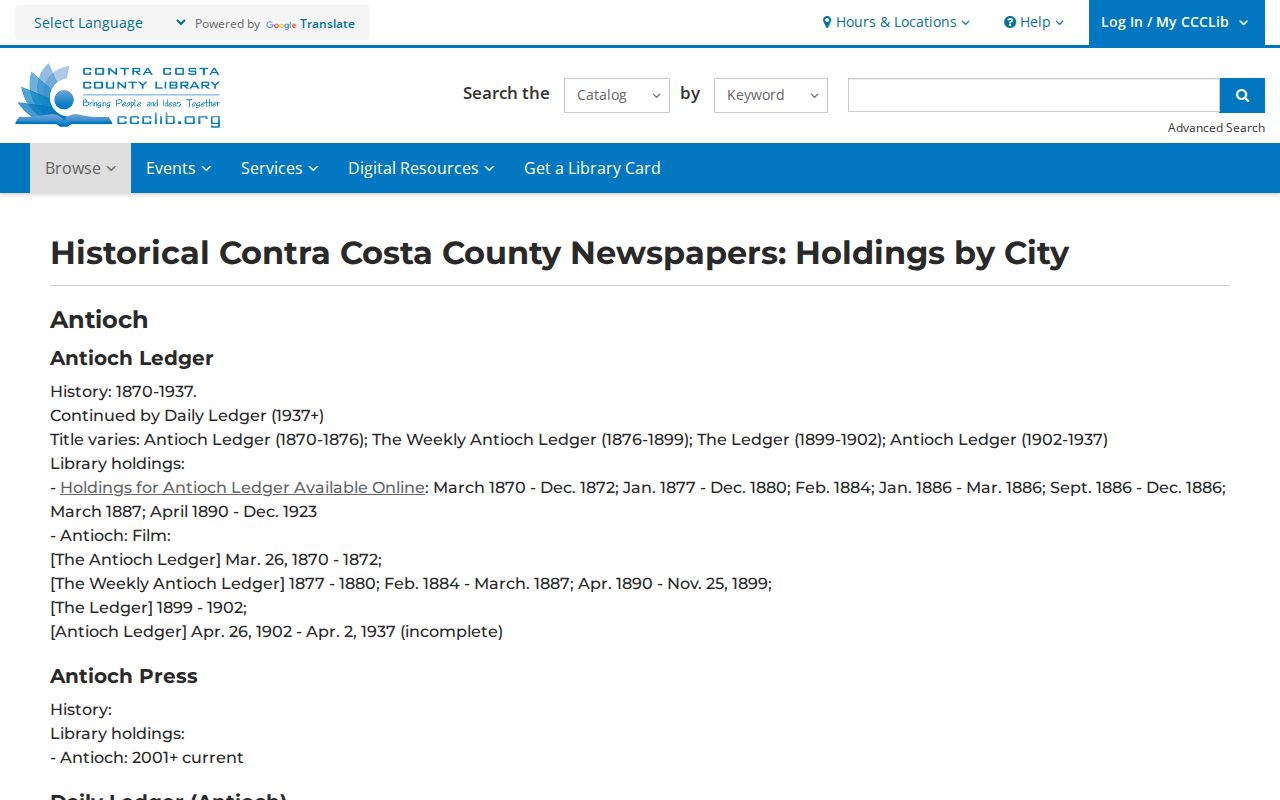
The Contra Costa County Library historical newspaper holdings fill parts of the years that telephone-book coverage does not. The Lafayette Sun runs from 1936 through 1972. Walnut Creek film covers 1957 through 1979 and successors. The Contra Costa Sun begins in 1970 and continues in current library access, while NewsBank coverage begins in 1996. Midweek Sun runs from 1970 through June 1980, Squire from July 1968 through October 1973, and the Contra Costa Times and precursors span 1913 through 2013 with gaps.
The newspaper title must match the year under review. A missing subscriber can be checked against a notice, wedding, school item, civic report, obituary, or property story without treating the newspaper as a replacement directory.
The library's historical newspaper map shows why a missing issue may require a nearby branch or a successor title.
Newspaper context is strongest when the dated article and the dated subscriber line point to the same name and address.
Lafayette's 1927 Directory Story
Lafayette's records history has a useful local twist. A moved schoolhouse became a combined post office, library, and telephone office in 1927. Three services that helped residents locate one another, exchange messages, and find books operated under one roof. That arrangement gives the telephone-book trail a civic setting rather than treating it as an isolated commercial product.
Library service likely began with an 1860 subscription library. The County Library began in 1913, and postmaster Carrie Hough Van Meter kept a 60-book branch in the post office beginning in 1915, serving until 1947. The library later moved to Town Hall and then to the 1961 Moraga Road building. Each move changes where a researcher may find local notes, maps, or oral accounts, even when the surname stays the same.
| 1860 | Likely beginning of a local subscription library |
|---|---|
| 1913 | Contra Costa County Library begins |
| 1915-1947 | A 60-book branch is kept in the post office |
| 1927 | A moved schoolhouse combines post office, library, and telephone office |
| Dec. 1934 | First verified LOC county telephone issue in the documented run |
| 1968 | Lafayette incorporates; the records landscape becomes partly municipal |
The 1927 building is a reminder that a directory name belongs to a local system of service, not just a page number. It also explains why the History Room's memories and photographs can be useful companions to a scan.
Lafayette Historical Directory Partners
The County History Center at 724 Escobar in Martinez is a second major stop. It is open Tuesday through Thursday from 9 a.m. to 4 p.m. and on the third Saturday from 10 a.m. to 2 p.m.; its phone is 925-229-1042. Its holdings can fill a Lafayette city directory gap with directories, maps, vital and cemetery indexes, obituary clippings, assessor tax books from 1850 through 1910, court files from the 1850s generally through 1911 with selected later series, more than 9,300 indexed historic cases naming more than 61,000 people, 107 naturalization volumes with more than 13,000 cases, and more than 1,700 maps.
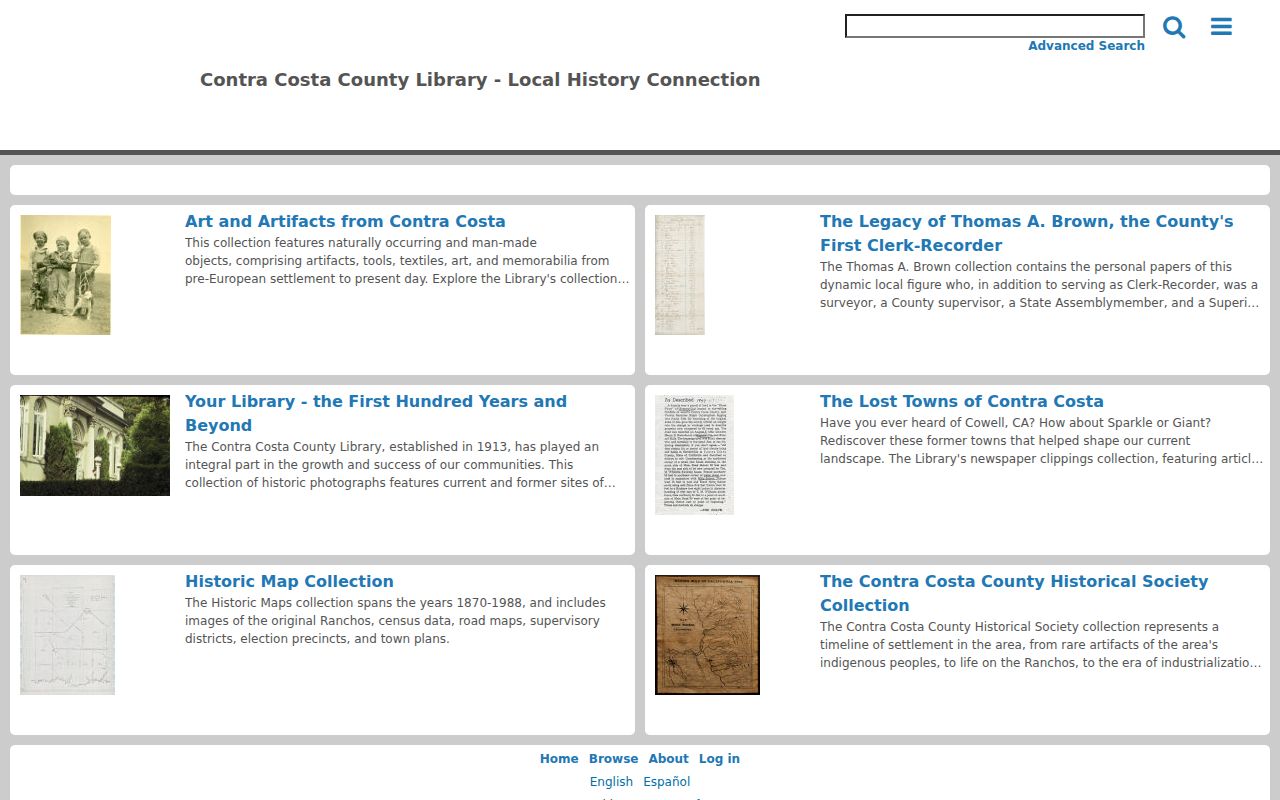
The Local History Connection supplies digitized material across local repositories. It is a useful companion to the LOC telephone scans, not proof that every missing issue or reverse directory has been digitized. Search a surname, a place, and a likely spelling, then inspect the item description and image.
The Local History Connection collection connects directory names with the wider Contra Costa archive.
Lafayette Cemetery's original 1874-era Death and Burial Record Book remains in the caretaker building, and the Lafayette Historical Society holds a copy. It records name, death date, cause, age, and place of death. No Lafayette-specific Library of Congress Sanborn title was located, so landownership, tax, city-layout, aerial, subdivision, survey, permit, and deed sources must carry the map work.
Trace Lafayette Families Across Directory Years
Tracing a Lafayette household works best when each issue is treated as one dated checkpoint. Begin with a surname from family papers, a deed, a cemetery entry, or a known address. The goal is not to force a continuous story from uneven books. The goal is to preserve each direct observation and mark each inference.
- Choose a surname, given-name initial, or known street and identify the nearest verified issue.
- Read the scan, record the subscriber name, address, telephone number, and printed issue date, then save the exact spelling.
- Repeat the search in the next verified issue, testing initials, surname-only OCR, and old road forms when the line disappears.
- Pair the directory snapshots with the 1940 and 1950 census schedules to compare household members, ages, relationships, and birthplace fields.
- Close an unexplained disappearance with the newspaper, probate index, cemetery book, or an indexed oral history before inferring a move or death.
A listing can vanish because service ended, the number was unlisted, another household member became the subscriber, the family moved, or the scan missed the name. A stable address with a new subscriber may show a change in the telephone record without proving when a household changed. A directory find that needs present-day checking can move to the Lafayette resident lookup, where the current record's custodian and limits remain distinct from a historic phone book.
Pair Lafayette Directories with Census
The National Archives census guidance supplies the household layer that a telephone listing lacks. Census schedules can show members, ages, relationships, birthplace, and other fields recorded by the enumerator. The 1950 schedule is the latest public population schedule under the 72-year rule. The 1960 schedule should not be presented as currently available; its expected release is in 2032.
For the documented early telephone issues, pair 1934 through 1950 directory evidence with the 1940 and 1950 census. Use the phone book to follow intervening address or number clues, and use the census to test whether a household member was present at enumeration. Ownership remains a separate question for deeds and assessment books. Occupancy, subscription, and title should never be collapsed into one label.
The National Archives census research page anchors the release rule used for Lafayette household comparisons.
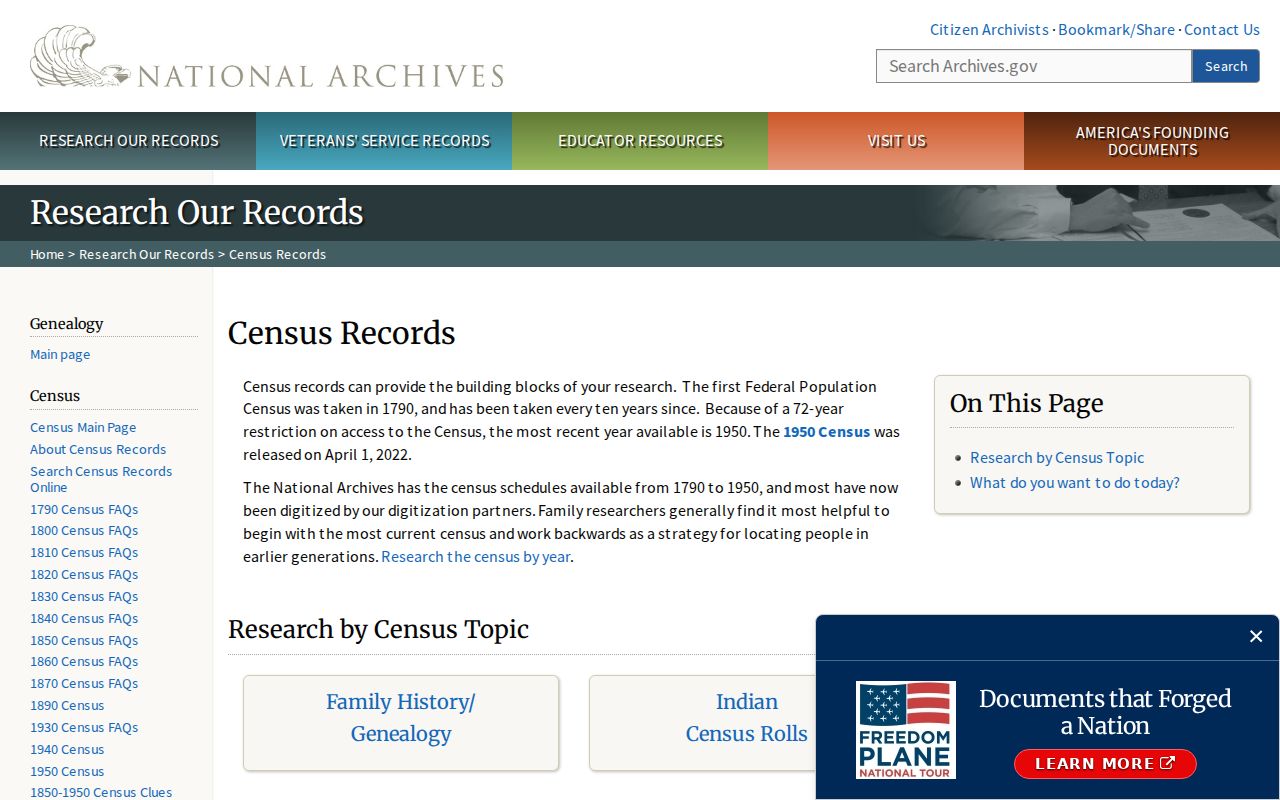
A Lafayette city directory line is most useful when its date, address, and subscriber name are kept beside the census year rather than treated as a substitute for it.